
Understanding Solar Panel Costs and ROI: A Smart Investment Guide
Investing in solar energy is becoming increasingly popular as homeowners and businesses seek sustainable solutions to reduce energy costs and environmental impact. This comprehensive guide will delve into the various components that contribute to solar panel installation costs and the return on investment (ROI) associated with solar energy systems. Readers will learn how to navigate the complexities of solar panel costs, including equipment, labor, and financing options, while also understanding the potential financial benefits of this renewable energy source. As energy prices continue to rise, understanding the financial implications of solar investments is crucial for making informed decisions. This article will cover key components of solar installation costs, how to calculate ROI, available tax credits and incentives, and financing options to help you maximize your investment.
What Are the Key Components of Solar Panel Installation Costs?
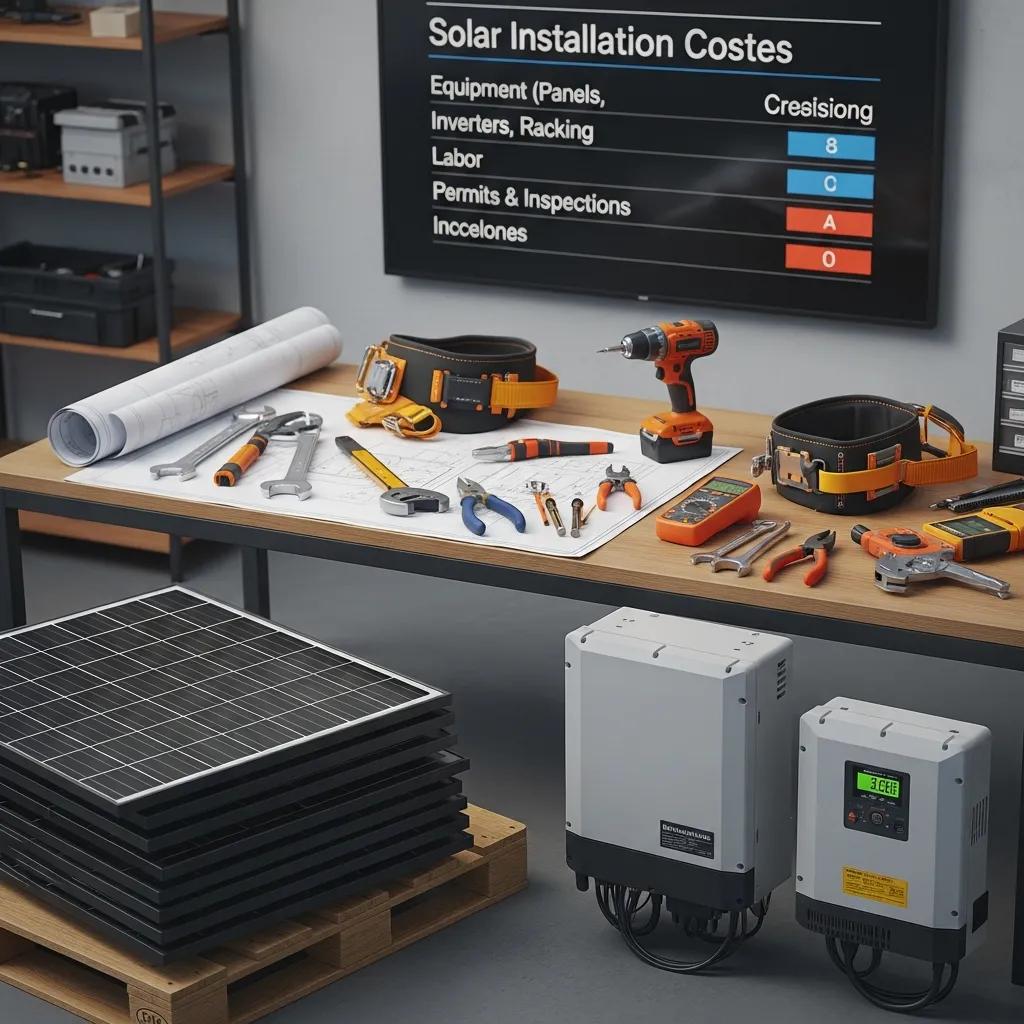
Solar panel installation costs can be broken down into several key components that contribute to the overall expense. Understanding these components is essential for homeowners and businesses considering solar energy investments. The primary factors influencing installation costs include equipment costs, installation fees, and permit costs.
Equipment Costs
The equipment costs associated with solar panel installations typically include the price of solar panels, inverters, and other necessary components. High-quality photovoltaic modules can significantly impact the overall cost, as they vary in efficiency and durability. Additionally, the choice of inverters, which convert solar energy into usable electricity, can also affect the total investment.
Installation Fees
Installation fees encompass the labor costs associated with setting up the solar energy system. These fees can vary based on the complexity of the installation, the location of the property, and the experience of the installation team. It’s essential to obtain multiple quotes from reputable installers to ensure competitive pricing.
Permit Costs
Permit costs are often overlooked but can add to the overall expense of solar panel installations. Local regulations may require specific permits for solar installations, which can vary by region. Homeowners should factor in these costs when budgeting for their solar energy projects.
How Do Equipment and Materials Affect Solar Installation Expenses?
The type of equipment and materials used in solar installations plays a significant role in determining overall expenses. Different solar panel technologies, inverter types, and mounting systems can lead to varying costs.
Types of Solar Panels
Solar panels come in various types, including monocrystalline, polycrystalline, and thin-film. Monocrystalline panels are generally more efficient and have a higher price point, while polycrystalline panels offer a more budget-friendly option. Thin-film panels are lightweight and flexible but may have lower efficiency rates.
Inverter Costs
Inverters are crucial for converting the direct current (DC) generated by solar panels into alternating current (AC) for household use. The cost of inverters can vary based on their type and efficiency. String inverters are typically less expensive, while microinverters and power optimizers can offer better performance but at a higher cost.
Material Quality
The quality of materials used in solar installations can also impact costs. Higher-quality components may come with a higher upfront price but can lead to better performance and longevity, ultimately providing a better return on investment.
What Are the Typical Labor and Permit Fees Involved?
Labor and permit fees are essential components of the overall cost of solar panel installations. Understanding these fees can help homeowners budget effectively for their solar projects.
Labor Costs
Labor costs can vary significantly based on the complexity of the installation and the local labor market. On average, labor costs can account for 10-20% of the total installation price. It’s advisable to obtain multiple quotes from different contractors to ensure competitive pricing.
Permit Fees
Permit fees are often required by local governments to ensure that solar installations comply with building codes and safety regulations. These fees can vary widely depending on the jurisdiction and can range from a few hundred to several thousand dollars. Homeowners should check with their local authorities to understand the specific permit requirements and associated costs.
Regional Variations
Labor and permit fees can also vary by region due to differences in local regulations and labor markets. Homeowners should consider these regional variations when budgeting for their solar installations.
How to Calculate Solar Energy Return on Investment and Payback Period?
Calculating the return on investment (ROI) and payback period for solar energy investments is crucial for understanding the financial benefits of solar systems. This section will outline the methods for calculating these metrics.
ROI Calculation Methods
To calculate ROI, homeowners can use the following formula:
Net profit is determined by subtracting the total costs of the solar installation from the total savings generated over a specific period. This calculation helps homeowners assess the financial viability of their solar investments.
Payback Period Definition
The payback period is the time it takes for the savings generated by the solar system to equal the initial investment. To calculate the payback period, homeowners can use the formula:
This metric provides insight into how long it will take for the investment to pay off, allowing homeowners to make informed decisions.
Further studies delve into the nuances of payback periods, distinguishing between financial returns and energy returns.
Solar PV Payback Periods: Financial vs. Energy Returns
Installing a solar photovoltaic (PV) array is both an environmental and a financial decision. The financial arguments often take priority over the environmental because installing solar is capital-intensive. The Simple Payback period (SPB) is often assessed prior to the adoption of solar PV at a residence or a business. Simple Payback was calculated based on initial capital cost, and on the availability of avoided electricity costs based on net-metering tariffs, which at present in the U.S. are 1:1 credit ratio, and in Poland is 1:0.7 credit ratio. For all projects, the EPB time was estimated at between 1.9 and 2.6 years. In contrast, the SPB for installed systems in the northeastern U.S. ranged from 13.3 to 14.6 years, and was estimated at 13.5 years for the example system in Lower Silesia, Poland. The comparison between SPB and EPB shows a disparity between motivational time frames, in which the wait for financial return is considerably longer than the wait for net energy harvest and the start of sustainable power production.
Comparing energy payback and simple payback period for solar photovoltaic systems, 2017
Factors Affecting ROI
Several factors can influence the ROI of solar energy investments, including energy prices, system performance, and available incentives. Homeowners should consider these factors when evaluating the potential financial benefits of solar systems.
What Formulas and Metrics Determine Solar ROI?
Understanding the formulas and metrics used to determine solar ROI is essential for evaluating the financial performance of solar investments. This section will provide an overview of common ROI formulas and metrics to consider.
Common ROI Formulas
In addition to the basic ROI formula mentioned earlier, homeowners can also consider other metrics such as the internal rate of return (IRR) and net present value (NPV). These metrics provide a more comprehensive view of the financial performance of solar investments.
Metrics to Consider
When evaluating solar ROI, homeowners should consider metrics such as:
- Energy Savings: The amount saved on electricity bills due to solar energy generation.
- System Performance Ratio: A measure of the actual energy output compared to the expected output.
- Incentives and Rebates: Financial incentives that can significantly impact the overall ROI.
Example Calculations
To illustrate the ROI calculation, consider a homeowner who invests $20,000 in a solar system and saves $2,000 annually on energy bills. The ROI can be calculated as follows:
This example highlights the importance of accurate calculations in assessing the financial viability of solar investments.
How Does the Payback Period Influence Investment Decisions?
The payback period is a critical factor in investment decisions related to solar energy systems. Understanding how this metric influences decision-making can help homeowners make informed choices.
Understanding Payback Period
A shorter payback period is generally more attractive to investors, as it indicates a quicker return on investment. Homeowners should aim for a payback period of 5-7 years to ensure a favorable financial outcome.
Investment Risk Assessment
Investors often assess the risk associated with longer payback periods. A longer payback period may indicate higher uncertainty regarding future energy prices and system performance, which can deter potential investors.
Decision-Making Factors
When evaluating solar investments, homeowners should consider factors such as energy price trends, available incentives, and the reliability of the solar system. These factors can significantly impact the payback period and overall investment decision.
Real-world analyses further illustrate how various economic factors and system performance influence the actual payback periods for domestic solar installations.
Domestic Solar PV Payback & Feed-in Tariff Impact
The paper reports on the two year performance of photovoltaic (PV) systems which were installed on 23 new build properties in South Yorkshire, UK, and the impact of the feed-in-tariff on payback periods. A discounted cashflow model was developed which determined payback periods based on actual and assumed performance and different economic scenarios.
Determination of payback periods for photovoltaic systems in domestic properties, F O’Flaherty, 2012
What Are the Latest Solar Investment Tax Credits and Incentives in 2026?
In 2026, various tax credits and incentives are available to encourage solar energy investments. Understanding these incentives can help homeowners maximize their financial benefits.
Federal Tax Credits
The federal solar investment tax credit (ITC) allows homeowners to deduct a percentage of their solar installation costs from their federal taxes. As of 2026, the ITC is set at 30%, providing significant savings for solar investors.
Research further highlights the historical context and impact of these federal incentives on renewable energy deployment.
Federal Tax Credits for Solar Energy Investment
Federal tax credits for renewable energy, particularly the wind production tax credit (PTC) and the solar investment tax credit (ITC), have offered financial incentives for renewable energy deployment over the last two decades in the United States. In December 2015, the wind and solar tax credits were extended by five years from their prior scheduled expiration dates, but ramp down in tax credit value during the latter years of the five-year period.
Impacts of federal tax credit extensions on renewable deployment and power sector emissions, T Mai, 2016
State Incentives
Many states offer additional incentives to promote solar energy adoption. These incentives can include rebates, tax credits, and performance-based incentives. Homeowners should research their state’s specific programs to take advantage of available benefits.
Eligibility Requirements
To qualify for federal and state incentives, homeowners must meet specific eligibility requirements, such as the type of solar system installed and the installation date. Understanding these requirements is crucial for maximizing financial benefits.
Which Federal and State Incentives Reduce Solar Panel Costs?
Federal and state incentives play a vital role in reducing the overall costs of solar panel installations. This section will outline the types of incentives available and their impact on solar investments.
Types of Incentives
Incentives can take various forms, including:
- Tax Credits: Direct reductions in tax liability based on installation costs.
- Rebates: Cash incentives provided by state or local governments to offset installation costs.
- Performance-Based Incentives: Payments based on the actual energy produced by the solar system.
Application Processes
Homeowners should familiarize themselves with the application processes for federal and state incentives. This may involve submitting documentation, completing forms, and meeting specific deadlines to ensure eligibility.
Impact on Overall Costs
By leveraging available incentives, homeowners can significantly reduce their upfront costs and improve the overall ROI of their solar investments. Understanding the available incentives is crucial for maximizing financial benefits.
How Do Rebates and Tax Credits Impact Overall ROI?
Rebates and tax credits can have a substantial impact on the overall ROI of solar investments. This section will explore how these financial incentives influence the financial performance of solar systems.
Rebate Programs
Rebate programs provide immediate cash incentives to homeowners who install solar systems. These rebates can significantly reduce the upfront costs, making solar investments more accessible and financially attractive.
Tax Credit Benefits
Tax credits allow homeowners to deduct a percentage of their solar installation costs from their federal taxes. This reduction in tax liability can enhance the overall ROI by lowering the effective cost of the solar system.
Calculating Net ROI
To calculate the net ROI after accounting for rebates and tax credits, homeowners can use the following formula:
This calculation provides a clearer picture of the financial benefits associated with solar investments.
What Financing Options Are Available for Solar Panel Investments?
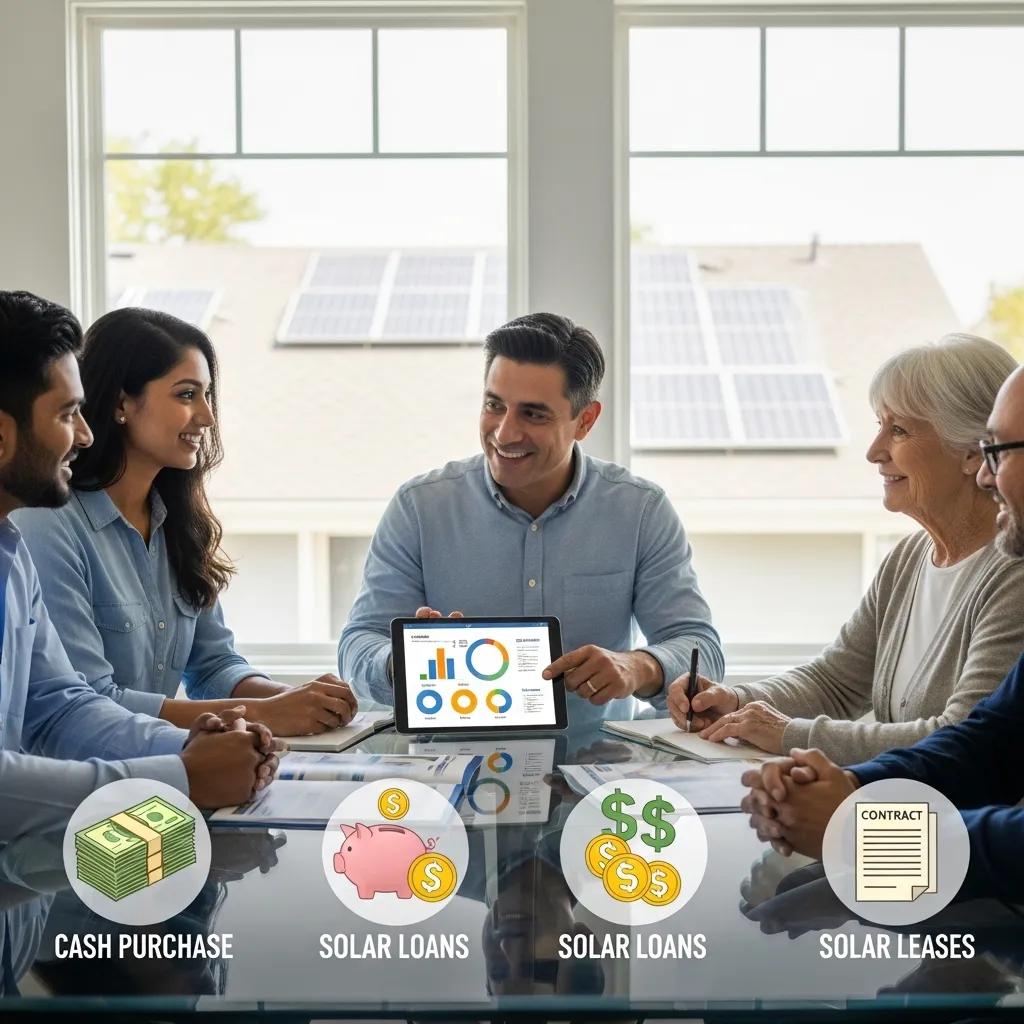
Financing options play a crucial role in making solar energy investments more accessible to homeowners. This section will explore the various financing options available for solar panel installations.
Types of Financing
Homeowners can choose from several financing options, including:
- Cash Purchase: Paying for the solar system upfront, which provides the best ROI.
- Solar Loans: Financing options that allow homeowners to pay for the system over time while still benefiting from tax credits and rebates.
- Leases and Power Purchase Agreements (PPAs): Agreements that allow homeowners to use solar energy without purchasing the system outright.
Eligibility Criteria
Each financing option may have specific eligibility criteria, such as credit scores and income levels. Homeowners should evaluate their financial situation to determine the best financing option for their needs.
Potential Benefits
Choosing the right financing option can significantly impact the overall ROI of solar investments. Homeowners should consider factors such as interest rates, loan terms, and potential savings when evaluating financing options.
How Do Solar Loans, Leases, and Power Purchase Agreements Compare?
Solar loans, leases, and power purchase agreements (PPAs) are popular financing options for solar panel investments. Understanding the differences between these options can help homeowners make informed decisions.
Loan vs Lease vs PPA
- Solar Loans: Homeowners own the system and benefit from tax credits and rebates. Monthly payments are made over time, but the homeowner retains all savings.
- Leases: Homeowners pay a fixed monthly fee to use the solar system without ownership. They may not benefit from tax credits but can enjoy lower energy bills.
- PPAs: Similar to leases, homeowners pay for the energy produced by the solar system at a predetermined rate. This option allows for lower upfront costs without ownership.
Cost Implications
The cost implications of each financing option can vary significantly. Homeowners should evaluate the long-term costs and benefits of each option to determine which aligns best with their financial goals.
Long-Term Benefits
While solar loans may require higher upfront costs, they often provide the best long-term financial benefits. Leases and PPAs can offer immediate savings but may not provide the same level of financial return over time.
What Are the Benefits and Drawbacks of Each Financing Type?
Each financing type for solar investments comes with its own set of benefits and drawbacks. This section will explore the pros and cons of solar loans, leases, and power purchase agreements.
Advantages of Each Type
- Solar Loans: Homeowners retain ownership, allowing them to benefit from tax credits and rebates. They also enjoy long-term savings on energy bills.
- Leases: Lower upfront costs and no maintenance responsibilities make leases an attractive option for some homeowners.
- PPAs: Similar to leases, PPAs provide access to solar energy without ownership, allowing homeowners to enjoy lower energy costs.
Disadvantages to Consider
- Solar Loans: Higher upfront costs may deter some homeowners, and monthly payments can be a financial burden.
- Leases: Homeowners do not benefit from tax credits, and the long-term savings may be lower compared to ownership.
- PPAs: Similar to leases, homeowners may miss out on potential savings and tax benefits.
Best Use Cases
Homeowners should consider their financial situation, energy needs, and long-term goals when choosing a financing option. Each option may be more suitable for different circumstances, and understanding the benefits and drawbacks is essential for making informed decisions.
What Are the Maintenance Costs and Lifespan Considerations for Solar Systems?
Maintenance costs and lifespan considerations are critical factors in evaluating the long-term viability of solar energy investments. This section will explore the typical maintenance costs and expected lifespan of solar systems.
Regular Maintenance Costs
Regular maintenance is essential for ensuring optimal performance and longevity of solar systems. Homeowners can expect to pay for routine inspections, cleaning, and potential repairs. On average, maintenance costs can range from $100 to $300 annually.
Expected Lifespan
Solar panels typically have a lifespan of 25-30 years, with many manufacturers offering warranties that guarantee performance for this duration. However, the efficiency of solar panels may decline over time, impacting overall energy production.
Efficiency Decline Over Time
As solar panels age, their efficiency may decline at a rate of approximately 0.5% to 1% per year. Homeowners should consider this decline when evaluating the long-term performance and financial viability of their solar investments.
How Much Does Regular Solar Panel Maintenance Typically Cost?
Understanding the costs associated with regular solar panel maintenance is essential for homeowners considering solar energy investments. This section will provide insights into typical maintenance costs.
Cost Range for Maintenance
Regular maintenance costs can vary based on the size of the solar system and the specific services required. Homeowners can expect to pay between $100 and $300 annually for routine maintenance, including inspections and cleaning.
Factors Affecting Costs
Several factors can influence maintenance costs, including the location of the solar system, the type of panels installed, and the frequency of maintenance services. Homeowners should budget for these costs when planning their solar investments.
Frequency of Maintenance
Routine maintenance is typically recommended at least once a year to ensure optimal performance. Homeowners should also monitor their solar systems regularly to identify any potential issues that may require immediate attention.
What Is the Expected Lifespan and Efficiency Decline of Solar Panels?
The expected lifespan and efficiency decline of solar panels are critical considerations for homeowners evaluating solar energy investments. This section will explore these factors in detail.
Average Lifespan of Solar Panels
Most solar panels are designed to last between 25 and 30 years, with many manufacturers offering warranties that guarantee performance for this duration. Homeowners can expect reliable energy production throughout this lifespan.
Efficiency Decline Rates
As solar panels age, their efficiency may decline at a rate of approximately 0.5% to 1% per year. This gradual decline can impact the overall energy production of the system, making it essential for homeowners to consider when evaluating long-term performance.
Impact on Investment
Understanding the expected lifespan and efficiency decline of solar panels is crucial for assessing the long-term financial viability of solar investments. Homeowners should factor these considerations into their ROI calculations.
What Are the Environmental and Financial Benefits of Investing in Solar Energy?
Investing in solar energy offers numerous environmental and financial benefits. This section will explore the advantages of solar energy systems for homeowners and the planet.
Reduction of Greenhouse Gases
Solar energy is a clean and renewable source of power that significantly reduces greenhouse gas emissions. By transitioning to solar energy, homeowners can contribute to a more sustainable future and help combat climate change.
Cost Savings on Energy Bills
One of the most significant financial benefits of solar energy is the potential for substantial savings on energy bills. Homeowners can reduce or even eliminate their electricity costs, leading to long-term financial benefits.
Increased Home Value
Investing in solar energy can also increase the value of a home. Studies have shown that homes with solar energy systems tend to sell for more than comparable homes without solar, making it a smart investment for homeowners.
How Does Solar Energy Reduce Carbon Footprint and Energy Bills?
Solar energy plays a crucial role in reducing both carbon footprints and energy bills. This section will explore how solar energy systems contribute to these benefits.
Environmental Impact
By harnessing solar energy, homeowners can significantly reduce their reliance on fossil fuels, leading to lower carbon emissions. This transition to renewable energy sources is essential for mitigating climate change and promoting environmental sustainability.
Financial Savings
Solar energy systems can lead to substantial savings on electricity bills. By generating their own power, homeowners can reduce their dependence on grid electricity and take advantage of net metering programs that allow them to sell excess energy back to the grid.
Long-Term Sustainability
Investing in solar energy not only benefits individual homeowners but also contributes to a more sustainable energy future. As more people adopt solar energy, the demand for fossil fuels decreases, leading to a cleaner and healthier planet.
What Case Studies Demonstrate Real-World Solar ROI Outcomes?
Real-world case studies provide valuable insights into the ROI outcomes of solar energy investments. This section will explore successful case studies that highlight the financial benefits of solar systems.
Successful Case Studies
Numerous homeowners have successfully implemented solar energy systems and experienced significant financial benefits. For example, a family in California installed a solar system that cost $15,000 and saw their energy bills drop by 80%, resulting in a payback period of just five years.
ROI Metrics
These case studies often demonstrate impressive ROI metrics, with many homeowners achieving ROIs of 15% or more. By leveraging available incentives and reducing energy costs, solar investments can yield substantial financial returns.
Lessons Learned
Homeowners considering solar energy investments can learn valuable lessons from these case studies. Understanding the factors that contribute to successful solar installations can help inform decision-making and maximize ROI.